SAME SHIT LIKED BY DIFFERENT TYPE OF ASSHOLES

In the annals of Hindi cinema, few coincidences are as cosmically suspicious as the near-identical DNA shared by Vishal Bhardwaj's Haider released on 2nd October 2014 and Aditya Dhar's Dhurandhar released on 5th December 2025. At first glance, one is a brooding, snow-swept adaptation of Hamlet set amid the Kashmir conflict, while the other is a sprawling, three-and-a-half-hour spy epic about an undercover RAW agent dismantling the ISI-underworld nexus in Karachi's Lyari badlands. Yet peel back the layers—past the pherans and Pathani suits, the poetry and the patriotism—and what emerges is essentially the same film, just remixed across borders, budgets, and beard aesthetics.
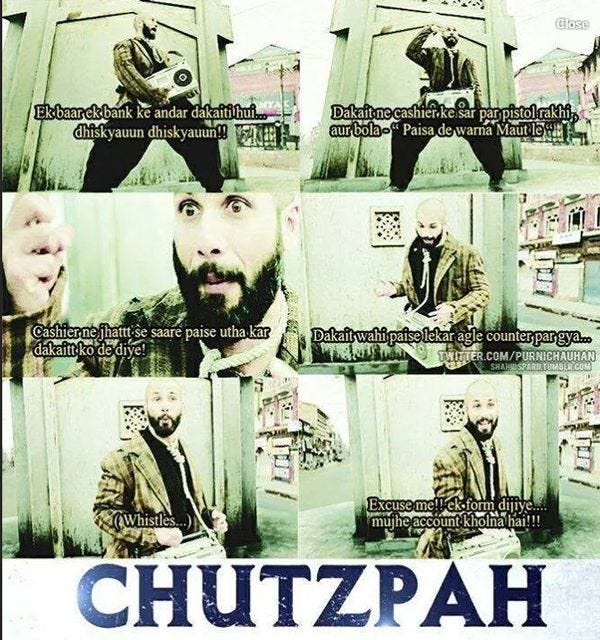
The Setup: A Man Returns "Home" to Find Betrayal Everywhere
Both stories begin with a protagonist thrust into a fractured, hostile "home." In Haider, Shahid Kapoor's titular character returns to Srinagar to search for his disappeared father, only to discover his uncle (played with delicious menace by Irrfan Khan's Roohdaar and Tabu's Ghazala affair) has orchestrated the chaos. The family unit is rotten; loyalty is a myth.
Fast-forward to Dhurandhar: Ranveer Singh's Hamza Ali Mazari (real name Jaskirat Singh Rangi) crosses into Pakistan via Torkham, embeds himself in Lyari's criminal ecosystem, befriends locals, rises through the ranks under gangster Rehman Dakait (Akshaye Khanna in icy-villain mode), and systematically betrays the very syndicate that embraces him. The "family" here is the gang—uncles, brothers, juice-shop confidants—all laced with treachery tied to larger forces (ISI, politicians, terror networks). Both films hinge on the same emotional fulcrum: the hero infiltrates a toxic surrogate family only to destroy it from within, all while wrestling with what "home" even means anymore.

The Mother Wound That Never Heals
No Indian revenge saga is complete without a maternal ghost haunting the frame. Haider weaponizes Tabu's Ghazala as the ultimate tragic mother figure—seductive, manipulative, ultimately self-destructive (that operatic graveyard explosion remains cinema's most glamorous act of maternal seppuku). Her love poisons everything.
Dhurandhar swaps the literal mother for the metaphorical one: the betrayed motherland. Hamza's mission is fueled by flashbacks to Indian soil, 26/11 carnage, Parliament attacks, Kandahar hijack trauma. The nation-as-mother is violated repeatedly; the son's duty is vengeance. Even the romantic subplot (a Karachi girl who becomes collateral) echoes Ghazala's doomed allure—love as distraction from the real betrayal. One film ends with a mother's literal detonation; the other detonates the hero's moral compass in service to the eternal mother(land). Same grenade, different pin.
Ghosts, Handlers, and Unfinished Business
Every Shakespearean tragedy needs a ghost. Haider gives us Irrfan's Roohdaar, literally rising from the snow to whisper, "Avenge me." Dhurandhar externalizes the ghost into institutional specters: R. Madhavan's Ajay Sanyal (IB director, channeling cold pragmatism) and the lingering wounds of past attacks become the spectral voice urging Hamza onward. Both "ghosts" demand retribution; both leave the protagonist morally unmoored. The difference? One appears in graveyards; the other appears in secure Delhi bunkers. Same existential whisper: finish what was started.
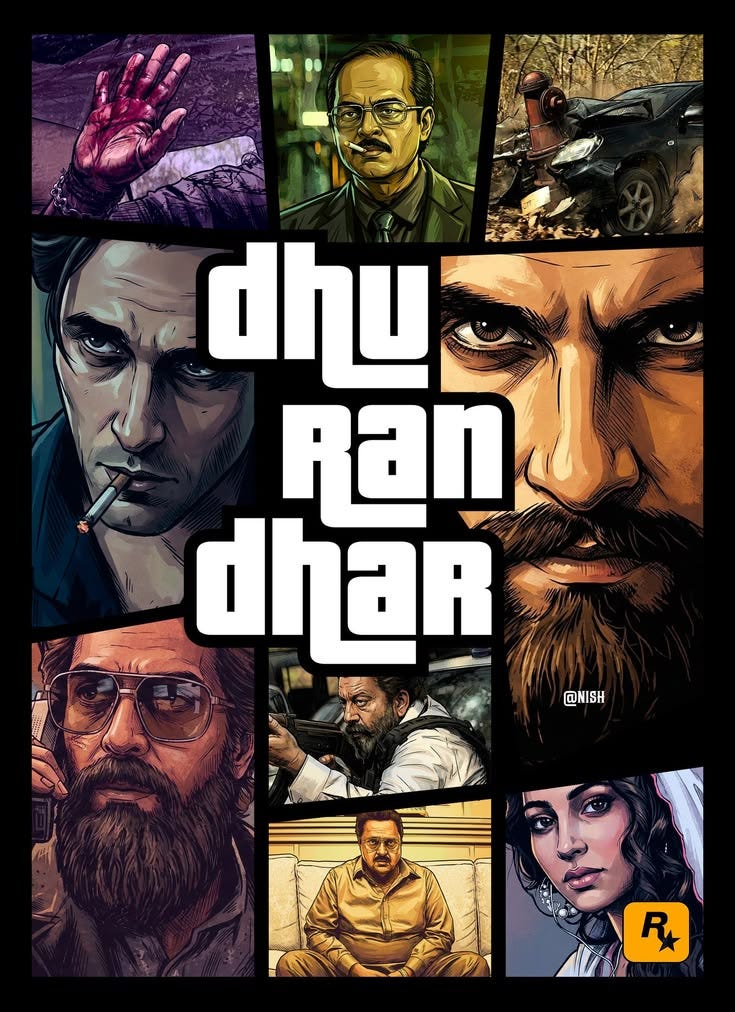
The Descent into Madness (or Method Acting)
The leads spend agonizing screen time deciding whether to stay human. Shahid's Haider recites soliloquies amid ruins, teetering between poetry and psychosis. Ranveer's Hamza grows a new identity every few chapters—waiter, lieutenant, kingpin—while staring into the abyss of Lyari's violence, slowly losing pieces of himself. Both characters monologue internally about identity, loyalty, and revenge. Haider quotes Shakespeare; Dhurandhar quotes chapter titles like "Et Tu Brutus" and "The Butterfly Effect." One goes feral with a gun and grief; the other goes feral with a fake beard and suppressed rage. Identical spiral, different soundtrack.
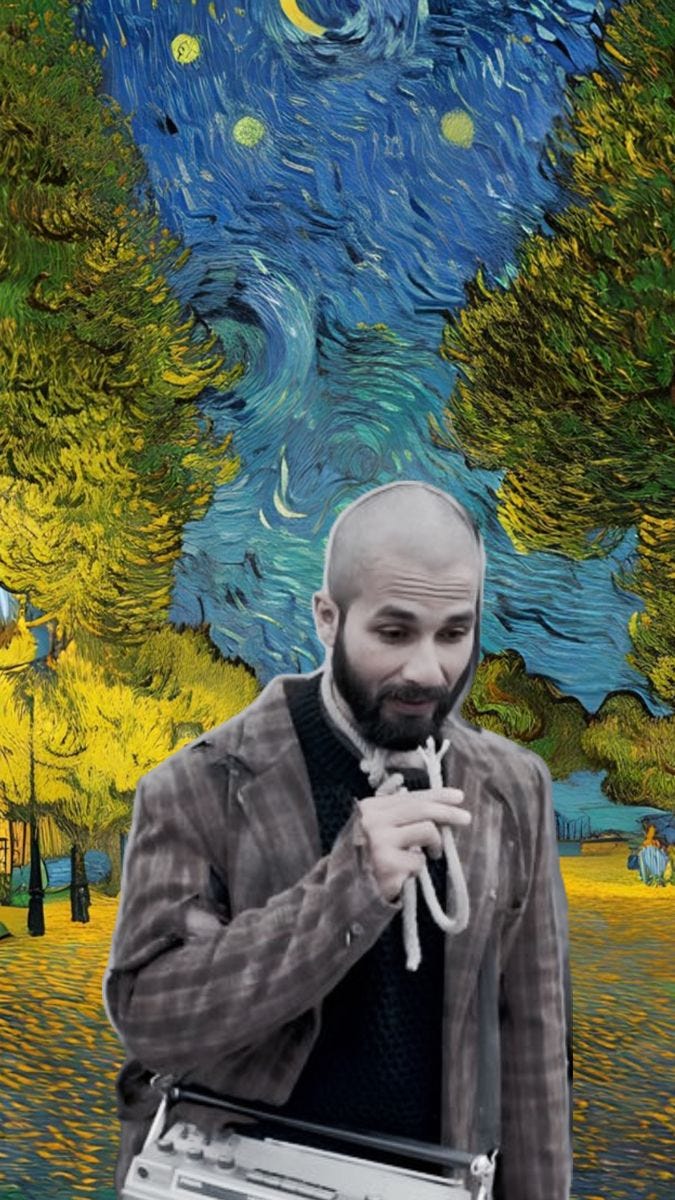
The Finale: Blood, Ambiguity, and Limping Away
Both conclude in carnage. Haider leaves bodies in the snow, the hero vanishing into fog—revenge achieved, but at soul-crushing cost. Dhurandhar (Part 1, anyway) ends with betrayals, eliminations, and Hamza seizing control of the underworld for Indian intelligence, limping into moral grayness while teasing a sequel. Everyone dies (or gets dramatically offed); the protagonist survives, forever changed, forever scarred. Happiness? Not on the menu.
In the end, Haider and Dhurandhar are twins separated by a Line of Control and eleven years. One dresses its Shakespeare in conflict poetry and arthouse restraint; the other dresses it in high-octane espionage, ensemble firepower (Sanjay Dutt, Arjun Rampal, Akshaye Khanna), and chest-thumping nationalism. Vishal Bhardwaj gave us Hamlet in a war zone. Aditya Dhar ran the same script through a RAW filter, swapped Kashmir for Karachi, and added ₹1400-crore VFX gloss. Same bones, different flesh.
So the next time someone dismisses one as "art" and the other as "propaganda," remind them gently: they're looking at the same picture—just framed differently. One whispers betrayal in verse; the other shouts it with bullets. But the tragedy? Identical.